
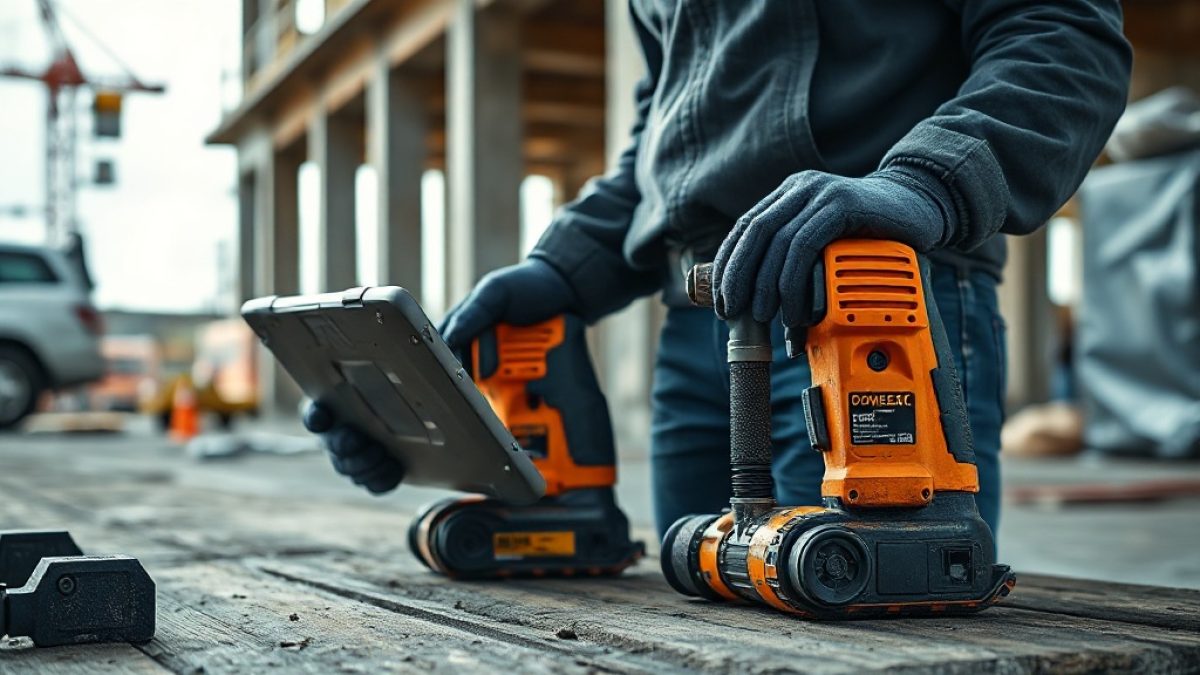
Construction is one of the toughest environments asset management can face. Tools and equipment move between sites, live outdoors in dust and rain, pass through many hands, and disappear with alarming regularity. A generator worth thousands can sit in mud for weeks with nobody quite sure which project it belongs to. For project-based businesses, where every job is temporary and the whole operation packs up and moves on, keeping track of physical assets is not paperwork; it is the difference between a healthy margin and a slow bleed of losses.
Yet construction firms often manage millions in plant and tools with a whiteboard and a foreman's memory. It works until it doesn't, and then a project stalls because the right compactor is on the wrong site, or an audit reveals equipment that vanished months ago. This article looks at what makes asset management genuinely hard in construction and project work, and the practical habits that keep tools where they should be, jobs on schedule, and equipment earning its keep instead of gathering rust.
Why construction assets are so hard to track
The core challenge is movement. In an office, a laptop stays roughly where you left it, but on a construction operation everything travels. Tools go from the yard to site A, get borrowed for site B, ride home in a worker's vehicle, and reappear weeks later somewhere unexpected. Every movement is a chance for an asset to fall off the record, and with dozens of moves a week across multiple projects, a system that relies on memory simply cannot keep up. Constant motion is the defining problem.
The second challenge is the harsh environment and shared usage. Construction equipment lives outdoors, gets covered in cement and mud, and is used by whoever is on shift. Labels wear off, serial number plates get painted over, and no single person feels responsible for any given item. This combination, high mobility, harsh conditions and diffuse ownership, is exactly the recipe that makes traditional tracking break down. Solving it requires methods built for the reality of a site, not adapted from an office filing cabinet.
Tie every asset to a project and a person
The single most useful habit in construction asset management is assigning each item to both a project and a responsible person at all times. It is not enough to know a tool exists; you need to know which job it is currently working on and who signed for it. When accountability is personal and specific, tools stop drifting, because someone always has their name against the item. When a project ends, that same link tells you exactly what needs to be recovered before the site is handed over and the crew disperses.
This project-and-person linkage also transforms your costing. When you know which equipment served which job and for how long, you can allocate plant costs accurately across contracts instead of guessing. That visibility is a natural extension of solid asset tracking best practices, applied to a world where the "location" of an asset is really a project that will one day close. Firms that track this link consistently find they bid more accurately too, because they finally know what their equipment truly costs to deploy on a typical job.
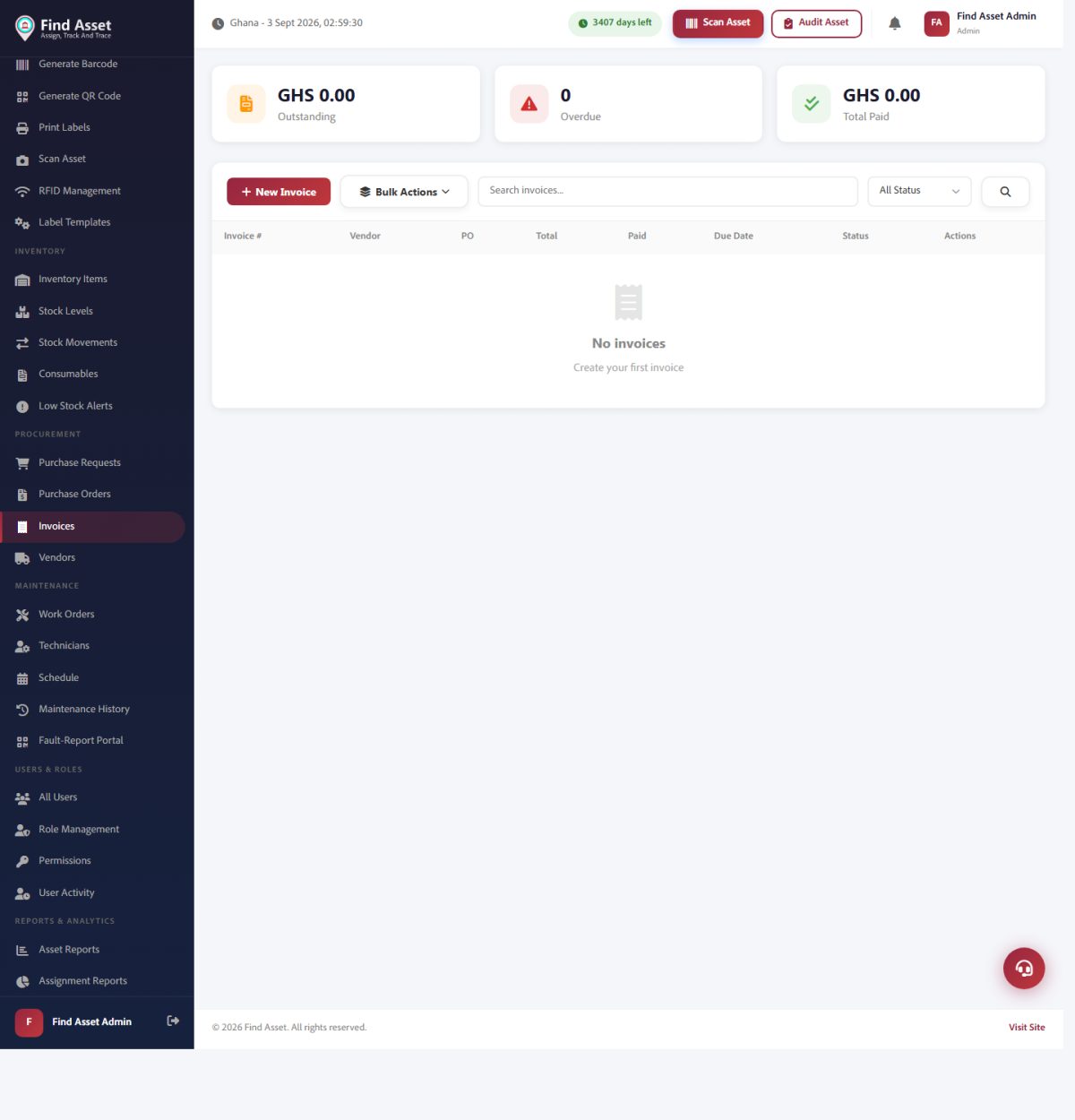
Construction assets move between sites and hands all day. Find Asset keeps purchase invoices (above) tied to the record, so even a well-travelled tool has a clear proof of ownership and cost behind it.
Check-in and check-out at the yard
Losses on construction jobs usually happen in the gaps between sites, so the yard is where control is won or lost. Treat the yard like a library: nothing leaves without being checked out to a project and a person, and nothing returns without being checked back in. A quick scan as equipment loads onto a truck creates an instant, honest record of what went where. This one discipline catches most disappearances early, while there is still a chance of recovery, rather than at year-end when the trail has gone cold.
The check-in and check-out habit also settles disputes before they start. When two site managers both swear they need the same excavator, the record shows exactly where it is and who has it, ending the argument in seconds. Over time the data reveals patterns too, which tools always come back late, which sites are hard on equipment, which crews look after their kit. Those insights let you manage proactively instead of firefighting, and they turn the yard from a chaotic staging area into a genuine control point.
Construction tracking essentials
- Link every asset to both a current project and a responsible person
- Check equipment out and back in at the yard, every single time
- Use rugged labels that survive dust, water and rough handling
- Schedule maintenance around idle windows, not on-site breakdowns
Maintenance is cheaper than downtime
On a construction site, a broken-down machine does not just cost a repair bill; it stalls an entire crew and can push a project past its deadline penalties. That makes preventive maintenance far more valuable in construction than in gentler industries. Servicing a generator or mixer on a planned schedule, ideally during natural idle windows between jobs, avoids the far greater cost of a mid-shift failure with twenty workers standing idle. Tracking usage hours against each asset lets you time that servicing intelligently rather than by guesswork.
Good asset records are what make preventive maintenance possible, because you cannot service what you cannot find or whose history you do not know. When each machine carries a maintenance log tied to its usage, you spot the units that are becoming money pits and retire them before they strand a crew. Our guide to preventive maintenance basics lays out the fundamentals, and they apply with extra force on site, where a single unexpected breakdown can wipe out a day's progress across a whole project.
Owned, hired or on a project: know the difference
Construction firms rarely own everything they use. A typical job runs on a mix of owned plant, hired equipment and items assigned temporarily from a central pool. Muddling these together is expensive: you keep paying rental on hired kit that is sitting idle, or you lose owned assets among a sea of borrowed ones. A good register distinguishes clearly between ownership types so you always know what is costing you rental by the day and what is yours to deploy freely. The table below shows how each type demands slightly different handling.
Getting this distinction right directly protects your cash flow. Hired equipment is a running cost that should be returned the moment a task is done, while owned equipment is a sunk investment you want working as many hours as possible. When your system flags which is which, site managers make better daily decisions about what to send back and what to keep busy. Over a year, simply returning hired plant on time rather than a week late can save a project-based business a surprising amount of money.
| Asset type | How to manage it on site |
|---|---|
| Owned plant and tools | Maximise utilisation, track maintenance, recover at project end |
| Hired equipment | Return promptly when idle, track rental start and end dates |
| Pooled shared tools | Check out to a person, enforce return between jobs |
| Consumables and small tools | Track by batch or kit, expect higher loss, budget accordingly |
Recovering assets when a project closes
The end of a project is the highest-risk moment for asset loss. Sites wind down in a hurry, crews scatter to new jobs, and equipment gets left, borrowed or simply forgotten in the rush to demobilise. A firm that tracks assets by project has a decisive advantage here: it can generate a clean list of everything assigned to the closing job and tick each item off as it returns to the yard. Everything that construction involves, from temporary works to the wider construction process, is temporary, which is precisely why recovery discipline matters so much.
Make a formal demobilisation checklist part of every project's closeout, driven by your asset records. Before a site is signed off as complete, the assigned equipment list should be fully accounted for, with any missing items investigated while people and memories are still fresh. This turns asset recovery from a frantic scramble into a routine step, and it stops the slow attrition that sees a firm's tool inventory mysteriously shrink with every completed contract. The record makes the invisible losses visible while you can still act on them.
Bringing it together
Asset management in construction is harder than almost anywhere else, but the principles that tame it are refreshingly practical. Link every asset to a project and a person, control movement through disciplined yard check-in and check-out, maintain equipment before it fails, keep owned and hired kit clearly separated, and recover everything methodically when a job closes. None of this requires exotic technology; it requires consistent habits supported by a register that keeps up with how fast a construction operation actually moves.
Firms that adopt these habits stop treating tool losses as an unavoidable cost of doing business and start protecting margins that used to leak away invisibly. If you run a project-based operation and want to see how a proper system handles the constant motion of a construction environment, you can start a free 14-day trial and set up your yard, your projects and your plant in an afternoon. Once your equipment is visible and accountable, the daily chaos of a busy site becomes something you can finally manage rather than merely survive.