
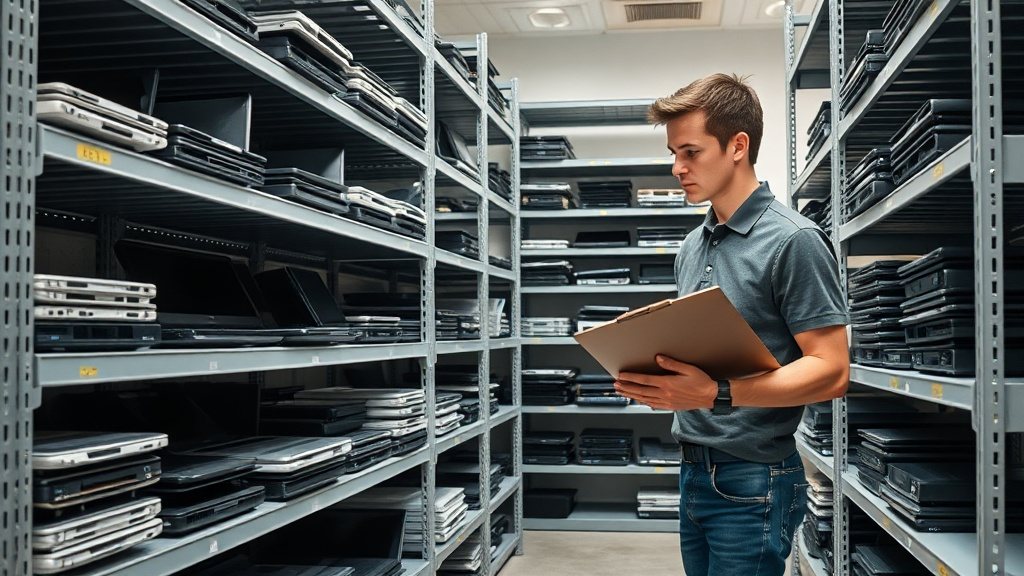
Walk into the bursar's office of almost any school at the start of a new term and you will find an inventory list that everyone trusts and nobody can defend. It records forty-two laptops in the computer lab, a full set of microscopes in the science block, and a library stocked to the shelf. Then a projector goes missing, a donor asks for proof that their gift is still in use, or the auditors arrive — and the neat list starts to wobble. Items have quietly walked, been borrowed and never returned, or been cannibalised for spare parts, and no single record captures any of it.
Schools are unusually hard places to track assets. Equipment moves between classrooms, staff turn over every few years, students handle the kit daily, and the same trolley of tablets might visit four different teachers before lunch. The good news is that getting control does not mean buying expensive systems or hiring more staff. It means adopting a handful of disciplined habits and giving each asset a permanent, scannable identity. Do that, and the term-start panic and the audit dread both fade away.
1. Give every asset a single, permanent identity
The root cause of most tracking failures in schools is that the same laptop is recorded three different ways: as "Dell laptop" in the ICT teacher's notebook, as "Computer 12" on a sticker, and as "asset 2019/PC/44" in the bursar's ledger. When a device goes missing, nobody can even agree on which record refers to it, so it is quietly written off as a mystery.
Fix this by assigning one unique code to each physical item and never reusing it. A microscope, a projector, a library scanner and a staffroom kettle each get their own identifier that stays with them for life. If you are still working from spreadsheets, our guide on how to build a proper register is the place to start before you tag a single thing.
Physical tags matter here. A number written in a ledger is a promise; a scannable label bonded to the equipment is a fact. Durable barcode or QR labels survive the knocks of daily school use far better than handwritten stickers, and they let a teacher or technician confirm an item in one scan rather than squinting at a faded number.
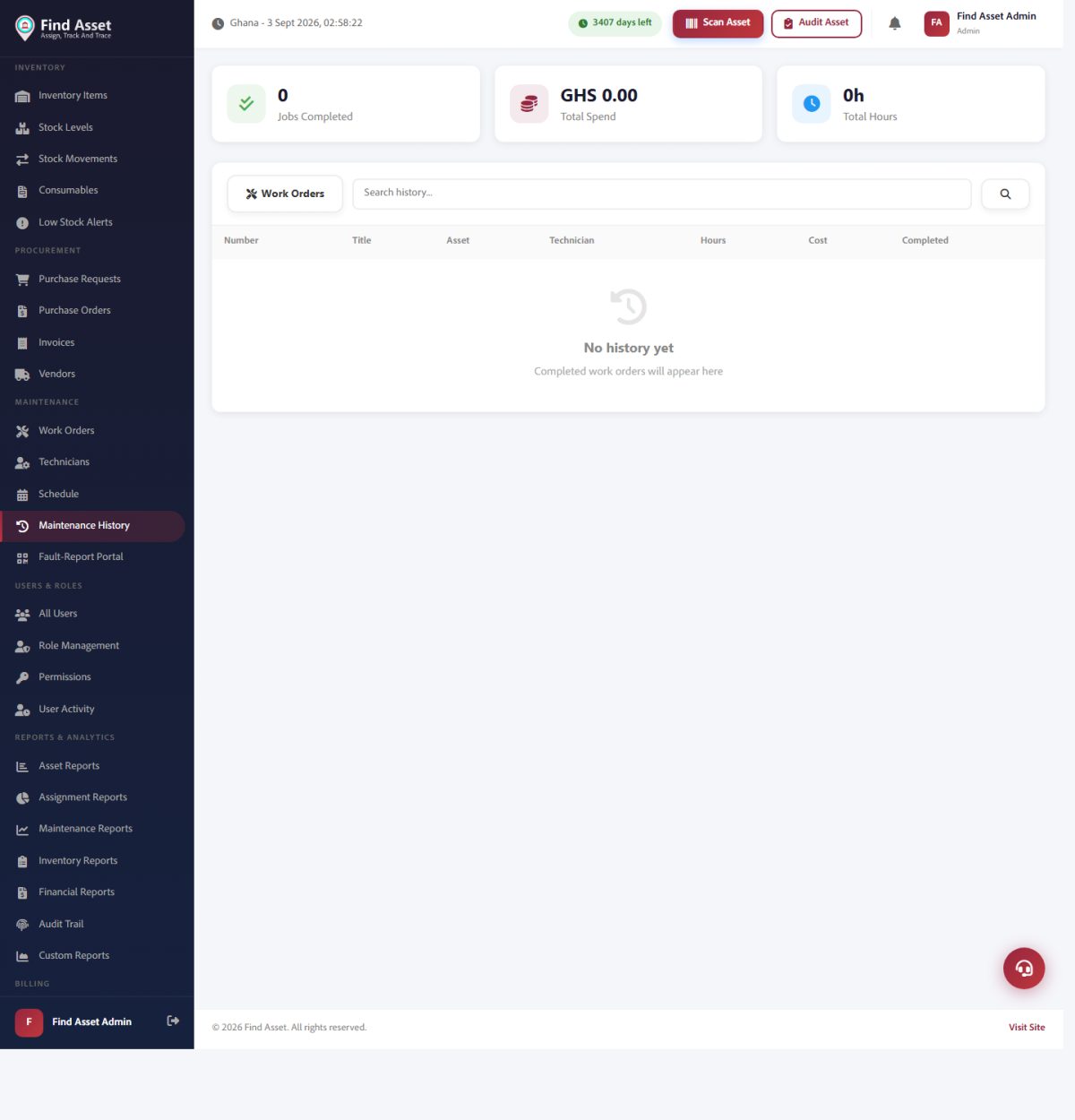
Schools run on shared equipment that everyone uses and no one owns. Find Asset's maintenance history (above) keeps a dated service record against each item, so a projector or lab machine has a clear story rather than a mystery fault.
2. Update the register at the point of movement
School registers rot because they are updated in batches, if at all. A trolley of tablets is signed out on paper on Monday, three go to a different teacher on Wednesday, one is left in a classroom over the weekend, and the master list is only reconciled at half-term — by which time nobody remembers the details. The record is always describing where things were, not where they are.
This is where a mobile-first system earns its keep. When a technician can scan a device and reassign it in ten seconds from a phone, updates happen at the moment equipment actually moves, not weeks later. For a school choosing what to print on its labels, our guide on choosing between QR codes and 1D barcodes is worth ten minutes before you commit to a symbol, because a busy corridor scan needs a tag that reads first time.
3. Assign a named custodian to everything
An asset that belongs to "the ICT department" belongs to no one. When a laptop cannot be found, "IT" cannot explain where it went, and the loss becomes everybody's fault, which means it is nobody's problem. Accountability only works when it has a name attached. A department is an abstraction that cannot be phoned, cannot be asked what happened, and cannot feel the small, useful sting of being the person whose signature sits against a missing laptop when the head teacher comes looking for it.
Give every item a single current custodian — the ICT coordinator for lab machines, the librarian for the barcode scanner and self-issue kit, the head of science for the microscopes and data loggers. This matters most in schools precisely because staff rotate. When a teacher leaves at the end of the year, their handover should include a clean list of every asset in their name, checked and transferred before they walk out of the gate.
Custodianship done well in a school
- Every asset has one current custodian, recorded by name, not by department.
- Transfers are logged, so the history shows every teacher and technician the item has passed through.
- Staff leaving at term end are cleared against their asset list before their handover is signed off.
- Shared equipment, such as a tablet trolley, has a designated keeper responsible for its return.
4. Audit little and often, not once a year
The annual stock-take is where schools discover everything that went wrong over the previous twelve months, all at once, usually the week before the auditors or the board expect a report. It is stressful, inaccurate and demoralising, because a year is far too long to let discrepancies build up quietly. By the time the count happens the staff who last handled a missing item may have left, the borrowing teacher may not remember, and the honest explanation and the suspicious one have become impossible to tell apart, so everything unaccounted for is simply written off in a single dispiriting session.
Cycle counting spreads the workload and catches problems while they are still small. Count the computer lab this month, the science block next month, the library after that, and rotate through the year. A technician armed with a phone can verify a full lab in under an hour, and each pass keeps the register honest. Our walkthrough on how to run your first asset audit covers preparation, counting and the reconciliation afterwards.
This rhythm also transforms how audits feel. Instead of scrambling to explain a year of drift, you present a register that has been continuously verified, with a scan history behind every line. External audits stop being an event you dread and become a report you can print. The board sees a school that plainly knows what it owns, the auditor finds the evidence already assembled rather than scrambled together overnight, and the bursar walks into the meeting with the quiet confidence that comes from having nothing to reconstruct and nothing to hide.
5. Watch the numbers that predict loss
You cannot improve what you do not watch, and schools rarely watch the right things. The number of assets owned is comforting but useless; the numbers below tell you whether control is tightening or slipping, and every one of them can be read off a dashboard without a data analyst. Think of them as the vital signs of the register: individually simple, but together they reveal whether the disciplines are actually being kept or whether the whole system is quietly reverting to the old habit of trusting a list nobody has verified.
| Number | What it explains | Where to aim |
|---|---|---|
| Located rate | Share of listed assets physically found during counts | Rising term by term |
| Unassigned assets | Kit nobody is listed against | Trending down to nothing |
| Stale records | Assets not scanned in 90 days | Falling |
| Overdue transfers | Items still signed to staff who have left | Zero at term end |
| Repair backlog | Devices flagged broken but not yet resolved | Shrinking |
None of these require a data scientist to interpret. A rising located rate and a falling count of stale records tell the head teacher and the board, in two numbers, that the school's assets are genuinely under control rather than just listed on paper. That is a powerful thing to be able to say in a governance meeting, because it replaces a vague reassurance that everything is probably fine with a measured, defensible claim that anyone can check against the register itself.
Why schools lose more than they realise
Beyond outright theft, schools bleed value in quieter ways. A projector bought for one classroom migrates to another and is never re-tagged, so it is bought again the following year. A set of lab meters is left in a cupboard, forgotten, and depreciates unused while the department requests replacements. Donor-funded equipment cannot be located when a report is due, straining the very relationships that keep resources flowing. Good tracking does not just deter loss; it stops the school paying twice for things it already owns.
There is a knock-on benefit for planning. When you know exactly what you have, how old it is and how often it fails, budgeting becomes evidence-based rather than a guess. A school can defend its capital requests to a board or a ministry with a register that shows genuine need, instead of a wish list nobody can verify.
The reputational stakes are higher than they first appear, too. A school that can show a visiting inspector, a fee-paying parent or a grant-making trust exactly where every donated laptop sits and how often it is used is a school that keeps earning support. The opposite school — the one that cannot account for last year's gift — quietly closes the door on next year's. In a sector where resources are tight and trust is the real currency, a clean, verifiable register is as much a fundraising asset as it is a management one, and it costs almost nothing beyond the habit of keeping it current.
Bringing it together
Technology is not what makes that list work. A permanent identity, updates at the point of movement, named custodians, frequent small counts, and a short list of watched metrics — these are disciplines, and the tools simply make them easy enough that busy teachers and technicians will actually stick to them. A school that adopts them stops losing kit in the gaps between good intentions.
Find Asset grew up in those corridors: a mobile-first register that tags, tracks and audits IT, lab and library equipment without adding to anyone's workload, designed for the realities of schools across Ghana and the wider region. If you want to walk into your next audit with a clean, verified list, start a free 14-day trial and tag your first lab this week. For the wider context, you can read the background on asset tracking too.