
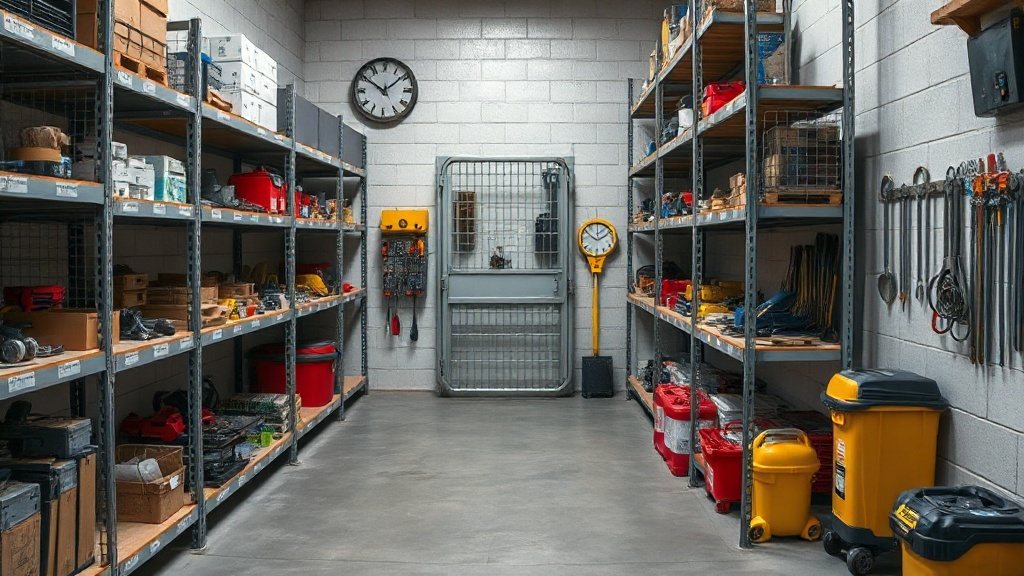
When people picture asset loss, they tend to imagine something cinematic: a laptop lifted from a desk, a toolbox carried out through a side door after dark. Those things do happen, but they are rarely where the money goes. The steady erosion of an asset register is far quieter than that. An item is borrowed and never returned. A machine is moved to another site during a busy week and nobody writes it down. Someone leaves the company and their equipment simply stays wherever they last put it. No alarm sounds, because nothing dramatic occurred.
This is the uncomfortable truth at the heart of prevention: most loss is drift and carelessness, not theft. That is actually good news, because drift responds well to ordinary discipline. You do not need surveillance or suspicion to keep hold of your assets. You need clear ownership, a habit of writing things down, and enough visibility that everyone assumes the register knows where things are. The rest of this article walks through the practical measures that make that possible, in roughly the order you would build them.
Understand where loss really comes from
Before you can prevent loss, it helps to be honest about how it happens in your own organisation. Ask anyone who has run a stock take and they will tell you the same story: the shortfalls are almost never at the dramatic end. They cluster around hand-offs, shared equipment, temporary moves and departures. An item passes from one person to another without a record, and from that moment its location is a matter of memory rather than fact. Memory fades faster than most people expect.
Once you accept that pattern, your priorities change. You stop pouring energy into locks and cameras alone and start closing the small gaps where accountability slips. Every measure that follows exists to do one thing: make sure that at any moment, every asset has a named person answerable for it. When that holds true, loss becomes rare and, when it does happen, easy to trace back to the point where the record broke.
Give every asset a named owner
Clear ownership is the single most powerful deterrent you have, and it costs nothing. An asset that belongs to "the department" belongs to nobody in particular, and things that belong to nobody are the first to wander off. An asset assigned to a specific, named person behaves differently. That person notices when it is missing, hesitates before lending it carelessly, and feels a small but real sense of responsibility for its condition. Custody, in other words, changes behaviour.
The practical work here is to make sure your records reflect who actually holds each item, not who bought it two years ago. This is where a disciplined approach to assigning and checking out assets earns its keep. When an item moves from the store to a technician, from one office to another, or from a leaver back into the pool, the register should change with it. The goal is not bureaucracy for its own sake; it is that you can always answer the simple question "who has this?" without guessing.
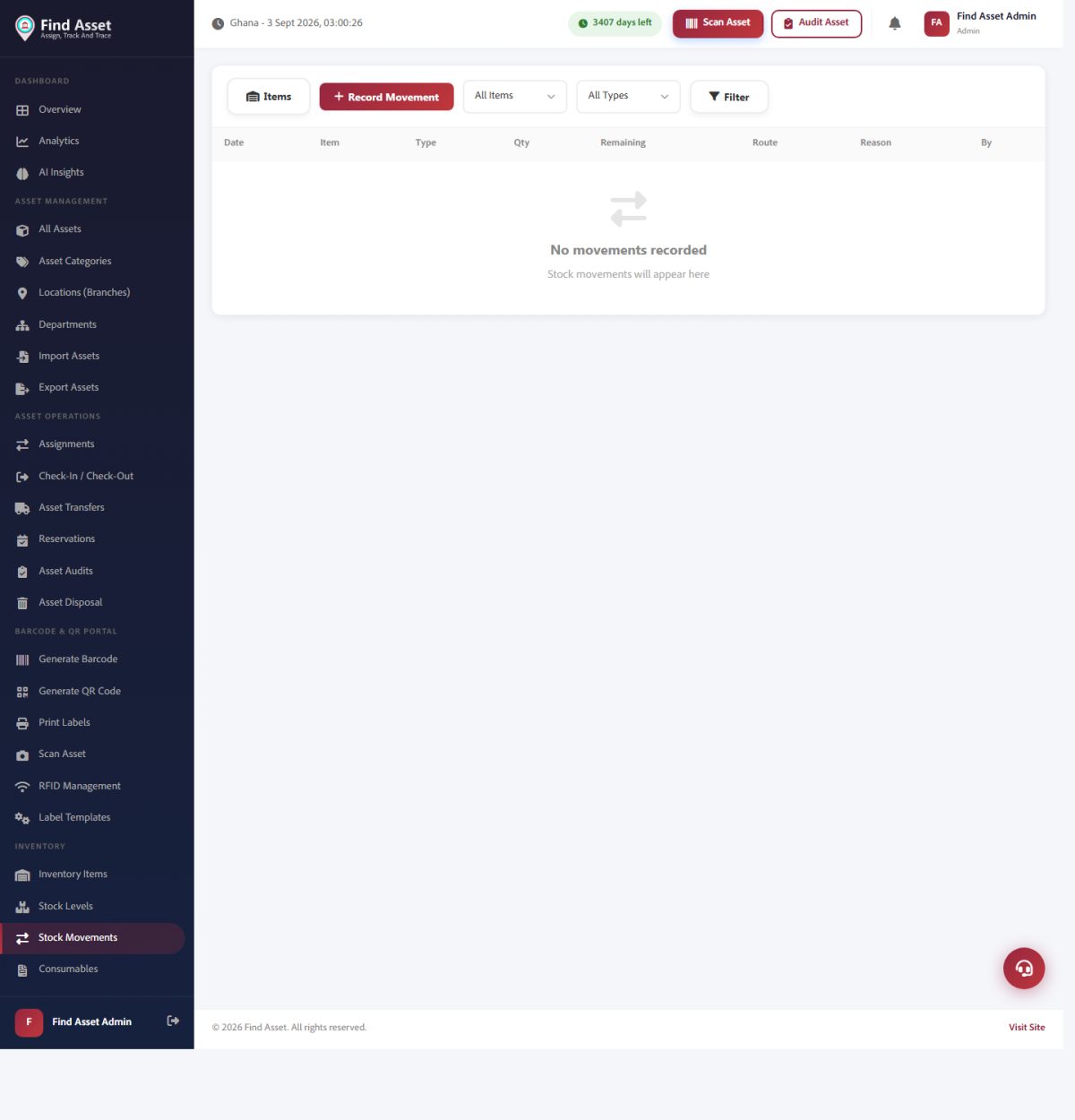
Loss and theft thrive on gaps in the record. Find Asset logs every movement (above), so an item that disappears has a last-known holder and location — the difference between a lead and a shrug.
Make sign-out and check-in a habit
Ownership tells you who is answerable in the long run; a sign-out discipline tells you where an item is right now. The two work together. A shared drill, a pool laptop, a piece of test equipment that circulates between engineers, all of these need a lightweight way to record who took them and when they came back. It does not have to be heavy. A quick check-out against the person's name, and a check-in when it returns, is enough to turn a vague "someone has it" into a precise "Ama has had it since Tuesday".
The reason this matters so much is that unreturned items are the classic slow leak. Nobody meant to keep them; they simply forgot, and without a record there was nothing to remind anyone. A visible check-in list closes that gap gently. When people can see that borrowing is recorded, they return things more promptly, and you gain the ability to chase the one item that has been out for a month rather than discovering the gap only at the annual audit.
Tag assets so they are hard to lose and hard to remove
A physical tag does two jobs at once. It links the object in front of you to its record, and it announces that the object is accounted for. Both matter for prevention. A durable, clearly visible tag makes an item easy to scan, easy to identify when it turns up in the wrong place, and noticeably less attractive to anyone thinking of quietly reallocating it to themselves. Visibility itself is a deterrent; an unmarked item is anonymous, and anonymity is what loss thrives on.
For prevention specifically, pay attention to the physical qualities of the tag. It should be durable enough to survive the environment, positioned where it can actually be read, and hard to peel off without leaving a mark. For high-value kit, tamper-evident labels are worth the small extra cost, because a damaged label is itself a signal. A consistent asset tag numbering system keeps the whole scheme legible, and a little thought about label placement prevents the frustration of tags that rub off, hide under grime or sit where no scanner can reach them.
| Loss hotspot | Why it leaks | Practical safeguard |
|---|---|---|
| Stores and stockrooms | High volume, many hands, easy to slip an item out unrecorded | Controlled access, sign-out log, periodic surprise counts |
| Loading bays and exits | Goods in motion, natural cover, busy hand-offs | Check items against a list at the door, restrict who signs off |
| Shared and pool equipment | No single named owner, easy to forget to return | Check-out per person, visible outstanding-items list |
| Staff departures | Kit stays put, nobody formally reclaims it | Offboarding checklist tied to the person's assigned assets |
| Temporary site moves | Items relocated in a hurry, records never updated | Update location at the point of move, not afterwards |
Audit regularly, and sometimes without warning
Audits serve two purposes, and it is worth being clear about both. The first is detection: a count tells you what has actually gone missing so you can act while the trail is still warm. The second, quieter purpose is deterrence. When people know that items are checked, and checked at unpredictable times, the temptation to take a shortcut, or something more, drops sharply. A register that is never verified is an invitation; a register that is spot-checked keeps everyone honest without anyone having to say so.
You do not need to count everything at once. A rolling programme, where a slice of the register is verified each month, spreads the effort and keeps the data fresh. Layer occasional surprise checks on top, especially around your known hotspots, and you get most of the deterrent value for a fraction of the disruption. If you are unsure how to pace this, our guidance on how often to audit assets sets out a sensible rhythm that most teams can sustain without it becoming a chore.
Prevention essentials
- Give every asset a named owner, so nothing belongs to "nobody".
- Record every hand-off at the moment it happens, not later from memory.
- Use durable, visible tags, and tamper-evident labels for high-value kit.
- Run rolling audits plus occasional surprise counts as both check and deterrent.
- Capture serial numbers and photos now, so recovery and claims are possible later.
Record serials and photos before you need them
Some of the most valuable prevention work is the kind you do long before anything goes wrong. Recording the serial number of each significant asset, along with a clear photograph, costs a few minutes at the point of registration and pays for itself the first time an item is lost or stolen. A serial number turns a vague "a laptop went missing" into a specific object that can be identified, reported and, occasionally, recovered. It also underpins the reduction of shrinkage that every well-run operation is quietly trying to achieve.
Photographs and serials matter just as much after the fact, when you are dealing with insurers. A claim supported by a dated record, a serial number and an image is far stronger than one resting on assertion. The same information supports any report to the authorities and gives recovered property somewhere to be matched back to. None of this prevents the initial loss, but it changes the outcome, and it turns your register from a simple inventory into genuine evidence.
Secure the hotspots and the moments of change
Prevention is not spread evenly; a small number of places and moments account for most of the risk. Stores, loading bays and exits are where assets are most mobile and most exposed, so they deserve the tightest access control and the clearest sign-off. Restricting who can move items in and out of these zones, and requiring that movements be recorded against a name, removes most of the easy opportunities. You are not treating people as suspects; you are simply making the accountable path the easiest path.
The other high-risk moment is change, and departures above all. When someone leaves, their assigned equipment should be reclaimed as a formal step, tied directly to the list of what they held. Without that, kit lingers in drawers and cupboards and quietly falls off the register. An offboarding checklist that reads straight from the person's assigned assets closes one of the most common leaks there is, and it does so calmly, as routine rather than confrontation.
Use your data to see the pattern
Everything above generates information, and that information is where prevention becomes strategic rather than reactive. Once you are recording ownership, movements and audit results, you can start to see where loss actually concentrates. Perhaps one location loses more than its share. Perhaps a particular category of equipment, or a specific hand-off point between two teams, keeps showing up in your shortfalls. These patterns are invisible in day-to-day operations but obvious in the aggregate.
Acting on those patterns is how you stop fighting the same fire twice. If a hand-off point leaks, you tighten the record at that exact step. If a category walks, you tag it more visibly or store it more securely. This is where solid tracking best practices repay the effort many times over: the same records that help you find one missing item let you see the structural weaknesses and fix them at the source, so that next quarter's audit is quieter than this one.
Bringing it together
None of these measures is dramatic, and that is precisely the point. Asset loss is rarely a single bold act; it is the accumulation of small, uncounted gaps, so prevention is the accumulation of small, deliberate habits. Give everything a named owner, record the hand-offs, tag things so they are hard to lose and hard to remove, audit with just enough unpredictability to keep people honest, and keep the serials and photos that turn a loss into a recoverable, claimable event. A tool that keeps all of this in one place makes the discipline far easier to sustain, and you can start a free 14-day trial to see how it fits your own operation.
Above all, remember that visibility is the quiet force doing most of the work. An asset that everyone can see is tracked, owned and occasionally checked is an asset that stays where it should. You are not trying to catch people out; you are trying to build an environment where losing track of things is simply harder than keeping track of them. Do that consistently, and the dramatic theft you feared turns out to be the smallest part of the problem you have already solved.